
About SamAziz
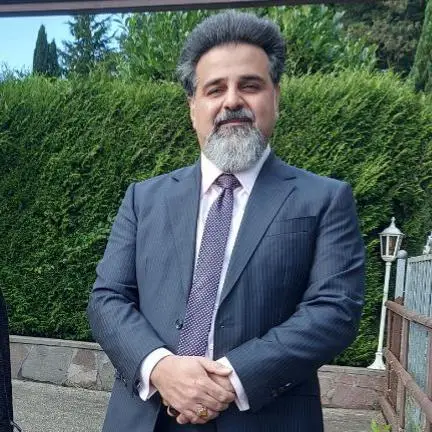
About SamAziz
Architect of Identity, Designer of Human Transformation Systems, and Interdisciplinary Researcher of Mind, Meaning, Behavior, and Data
The author of this book and creator of the course “Crossing the Identity Crisis” is professionally known as SamAziz and among his students and companions as “Sam Aziz” — a name that is not merely a title, but a living narrative of passage, self-redefinition, and devotion to human awakening.
Before anything else, he considers himself a seeker; a human being whose journey began not with ready-made answers, but with fundamental questions:
- Who is the human being?
- How is identity formed?
- Why do so many of us live within identities shaped by family, culture, fear, society, and power before ever truly knowing ourselves?
- And how can one move beyond imposed identities toward a conscious, authentic, and responsible way of living?
Sam Aziz was born in Tehran in 1980, within a historical and social context where human beings are often shaped by networks of roles, expectations, fears, and restrictive structures long before they are given the chance to discover themselves. His academic and intellectual path began in software engineering; yet over time, he realized that the most complex system is not hidden in computer code, but within the human mind, psyche, behavior, and destiny.
This realization became the fundamental turning point of his life:
From building tools to understanding the builder.
From designing software to designing pathways for human transformation.
From analyzing external systems to architecting the inner systems of the human being.
From building tools to understanding the builder.
From designing software to designing pathways for human transformation.
From analyzing external systems to architecting the inner systems of the human being.
Since the early 2010s, he has pursued a research-oriented path through self-knowledge, psychology, behavioral sciences, sociology, and spiritual studies. In 2015, he founded the Bani Adam Foundation of Awareness — a movement intended to take self-knowledge beyond intellectual understanding and transform it into a practical process for reconstructing identity, reclaiming agency, and living consciously.
In his perspective, self-knowledge is not merely an inner exercise; it is a reclaiming of human dignity. He believes that many psychological struggles are not simply products of individual weakness, but reflections of external systems, upbringing, culture, fear, suppression, migration, rootlessness, loss of meaning, and the disconnection between human beings and their authentic selves. For this reason, in his approach, personal growth without freedom, responsibility, meaning, and human dignity remains incomplete.
In 2021, his professional path expanded in Germany, and his activities entered a more structured phase through collaboration with 44Tage Institute — a space where lived experience, scientific knowledge, inner intuition, educational design, applied psychology, and systems thinking converged into practical pathways for human transformation.
Over recent years, Sam Aziz has expanded his intellectual and professional path through a broad range of international education in psychology, cognitive science, decision-making, mental health, positive psychology, resilience, coaching, organizational behavior, and data analytics.
At the University of Cambridge, he studied cognitive psychology, neuropsychology, decision-making, emotion, memory, and learning, including specialization in The Science of Mind and Decision Making, focused on memory, attention, emotion, decision-making, and the relationship between brain function and behavior.
He also studied general psychology and child development through Yale University, including Introduction to Psychology with Paul Bloom and Everyday Parenting: The ABCs of Child Rearing with Alan E. Kazdin, professor of psychology and child psychiatry.
In abnormal psychology, the history of mental illness, and behavior change, he completed the Abnormal Psychology specialization through Wesleyan University — focusing on historical and modern diagnosis and treatment, compassionate responses to human suffering, and tools for improving life for individuals and those around them. His additional studies in schizophrenia, social psychology, and psychological disorders deepened his perspective on human suffering, psychological labeling, and the complexity of the relationship between individuals and society.
In the fields of anxiety, depression, mood disorders, substance use, and addictive behaviors, he completed courses and specializations through the American Psychological Association / PsycLearn, including Psychology of Anxiety, Mood, Substance Use, and Addictive Behaviors, focusing on diagnostic criteria, prevalence, contributing factors, and treatments with reference to ICD-11.
Another significant dimension of his scientific path lies in positive psychology. He completed the Foundations of Positive Psychology specialization through the University of Pennsylvania, studying with figures such as Martin E. P. Seligman, James Pawelski, Angela Duckworth, and Karen Reivich, with a focus on flourishing, resilience, perseverance, positive interventions, and designing life for well-being. This dimension of his studies strengthened a hope-centered perspective in his work: human beings are not merely collections of wounds and disorders; they also possess the capacity for flourishing, meaning, resilience, conscious choice, and self-renewal.
Alongside psychology, Sam Aziz expanded his data-driven approach through the Google Data Analytics Professional Certificate, including training in data preparation, processing, cleaning, analysis, visualization, R, Tableau, SQL, and case study execution. This analytical dimension allows his approach to human transformation systems to follow inner experiences, behavioral reports, reflective forms, progress pathways, and recurring life patterns not only intuitively, but also structurally, visibly, and analytically.
He has also completed training in coaching, client assessment, skill analysis, and client support through Goodwill Academy, including courses such as Client Intake, Assessments, Skill Analysis and Planning and Supporting Clients. These studies, combined with his practical work with students and seekers, contributed to methods in which each person’s growth path is approached not through generic prescriptions, but through assessment, analysis, companionship, and personalized design.
His studies in school health, special education, ADHD, autism, learning disabilities, social-emotional behavior, and healthy lifestyles through the University of Colorado System expanded his understanding of individual differences and special learning needs. Additionally, his education in industrial psychology through Illinois Tech and organizational behavior through IESE Business School, University of Navarra, enabled him to analyze the human being not only in therapy or personal growth settings, but also within organizations, work environments, leadership, and social roles.
In the spiritual and textual domain, he also studied Biblical Hebrew through the Israel Institute of Biblical Studies / eTeacher in connection with the Hebrew University of Jerusalem. This dimension of his journey reflects his interest in the linguistic, symbolic, mystical, and textual roots of meaning — where modern psychology, spiritual traditions, ancient languages, and the search for truth intersect.
The result of this path is the emergence of a position he describes as an Architect of Identity — someone who sees identity not as a label, social role, or mere mental image, but as a living, multilayered, and reconstructable structure.
In his perspective, human identity emerges at the intersection of multiple dimensions:
- Mind and body
- Emotion and behavior
- Family and culture
- Wound and meaning
- Freedom and responsibility
- Data and intuition
- Science and spiritual path
He is the creator of the SEIRS / Astrolabe of Life – Crossing the Identity Crisis program — a structured pathway for identity reconstruction that begins with discovering values and inner identity, continues through SWOT-like existential analysis, recognition of strengths, weaknesses, joy points, opportunities, and threats, then transforms life vision into goals, projects, work, and executable tasks, and finally integrates these into everyday living through routines, tracking, focus, action, and reflection.
What distinguishes Sam Aziz’s perspective is the integration of three foundational dimensions:
First, understanding the human psyche — from anxiety, depression, addiction, identity fragmentation, and inner wounds to resilience, meaning, flourishing, and conscious choice.
Second, systems design — transforming deep psychological and spiritual concepts into pathways, forms, practices, algorithms, metrics, programs, and daily action.
Third, commitment to human dignity and freedom — the belief that human beings should not remain imprisoned for life within roles imposed upon them, but can see themselves, choose consciously, reconstruct themselves, and rebuild their lives upon their inner truth.
In his works, self-knowledge is not a final destination; it is a living process.
- A movement from unconsciousness to insight
- from reaction to choice
- from fragmentation to coherence
- from imposed identity to authenticity
- and from living through fear to living through meaning
He believes that true transformation occurs when a person can truly see themselves, recognize unconscious patterns, distinguish authentic values from imposed ones, create a clear vision for life, and transform that vision into small, consistent, achievable behaviors in everyday life.
This book and this course continue along that very path.
Not as a final answer,
but as an astrolabe for seeing.
Not to construct a new human being from the outside,
but to reveal the human being who has, from the very beginning, been waiting in the depths of existence to be seen.
Not as a final answer,
but as an astrolabe for seeing.
Not to construct a new human being from the outside,
but to reveal the human being who has, from the very beginning, been waiting in the depths of existence to be seen.
 فارسی
فارسی  English
  Deutsch